When you crave the soothing warmth of an authentic Japanese side dish but need to maintain a high-protein, low-carb lifestyle, this 10-minute easy miso soup is the golden standard. Traditionally served as a foundational element of Japanese cuisine, miso soup is often misunderstood as a simple broth. However, by optimizing the protein content with silken tofu and whisked eggs, we transform this classic into a macro-balanced powerhouse that fits perfectly into a ketogenic or fitness-oriented diet.
Unlike many restaurant versions that use sugar-laden additives or MSG-heavy bases, this recipe focuses on artisanal quality and nutritional density. We utilize premium white miso paste for its probiotic benefits and umami depth, paired with a specialized dashi profile that ensures every spoonful is rich with ocean-inspired minerals and clean energy. Whether you are looking for a light lunch or a nutrient-dense starter for dinner, this method delivers professional results in less time than it takes to boil a pot of pasta.

Why This Miso Soup is the Perfect Low-Carb Side
The beauty of miso soup lies in its simplicity and its incredible efficiency. For those following a keto or low-carb regimen, finding satiating liquid-based meals can be a challenge. Most soups rely on cornstarch thickeners or root vegetables for body, both of which are high in carbohydrates. Our 10-minute version utilizes the natural thickness of miso and the structural integrity of silken tofu to provide a luxurious mouthfeel without the carb count.
Furthermore, the addition of eggs—a technique often found in “egg drop” variations—drastically boosts the protein profile. Each serving becomes a complete amino acid source, helping you hit your macros while enjoying a comforting, warm bowl of soup. The fermented nature of the miso paste also aids in digestion, which is crucial when transitioning into a higher protein diet where the gut microbiome requires extra support.
People Also Ask: Your Miso Soup FAQs Answered
Is Miso Soup Keto-Friendly?
Yes, absolutely. While miso paste is made from fermented soybeans (and sometimes grains), the amount used per serving is small. In this recipe, the 4 tablespoons of miso spread across a large volume of water equates to very few net carbs per bowl. By focusing on tofu and eggs as the primary solids, the overall glycemic load remains extremely low, making it an ideal choice for fat-burning phases.
How Do I Increase the Protein Without Adding Carbs?
The most effective way to boost protein in this recipe is through the “ribboned egg” technique. By slowly drizzling whisked eggs into the simmering broth, you create delicate protein strands that absorb the savory dashi flavor. Additionally, silken tofu is a low-calorie, high-protein plant source that provides a velvety texture that mimics dairy without the lactose or sugars.
Can I Make This Without Alcohol-Based Mirin or Sake?
Many traditional recipes call for sake or mirin (sweet rice wine), but these are not necessary for a high-quality broth and are often avoided by those watching sugar intake or avoiding alcohol. This recipe is 100% alcohol-free, relying instead on high-quality chicken bouillon paste and dashi powder to provide the complex, fermented depth typically provided by rice wines. This ensures a clean, halal-friendly, and alcohol-free flavor profile.
The Science of Umami: Why These Ingredients Work
To achieve a restaurant-quality broth at home, it is essential to understand the synergy of the ingredients. The primary engine of flavor here is the White Miso Paste. Unlike red miso, which is fermented longer and has a salty, pungent bite, white miso (Shiro Miso) is milder and slightly sweeter, providing a delicate ferment that doesn’t overwhelm the palate. It acts as a natural emulsifier, giving the water a “cloudy” and full-bodied appearance.
The Dashi Powder and Chicken Bouillon Paste work together to create a multi-dimensional savory base. Dashi provides the “sea” flavor via bonito (fish) or kombu (seaweed) extracts, while the chicken bouillon adds a grounded, savory depth that appeals to the western palate. Dried Wakame Seaweed is more than just a garnish; as it rehydrates, it releases minerals and iodine, contributing to a silky texture and a punch of oceanic umami.
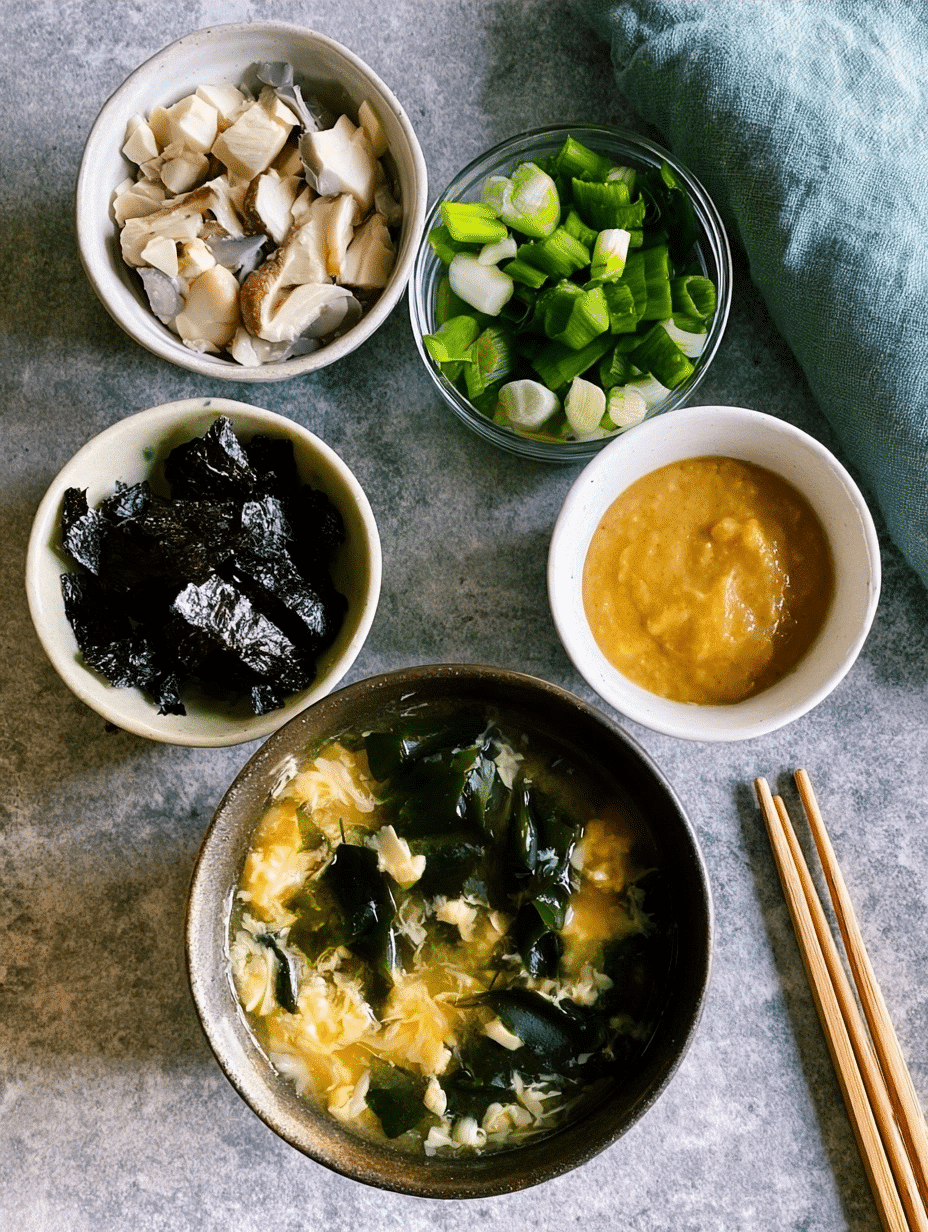
Step-by-Step Instructions for the Perfect Miso Soup
Achieving the perfect consistency in miso soup requires following a specific order of operations to preserve the delicate probiotics in the miso and the texture of the tofu.
- Prepare the Base: Start by bringing 8 cups of water to a gentle simmer in a large pot. Avoid a rolling boil at this stage, as extreme heat can scorch the delicate notes of the dashi.
- Incorporate the Umami: Stir in the chicken bouillon paste and the dashi powder. Whisk until completely dissolved. You should see the water turn a light golden hue.
- The Miso Technique: This is the most critical step. Place your 4 tablespoons of miso paste into a small strainer or a separate bowl with a half cup of the warm broth. Whisk it until smooth before adding it back to the main pot. Never dump a cold clump of miso directly into the pot, as it will result in salty lumps.
- Add the Solids: Gently slide the cubed silken tofu and the dried wakame into the pot. The wakame will look small at first but will expand significantly.
- The Egg Ribbon: Whisk your 3 eggs in a small bowl. Create a slow whirlpool in the soup pot with a spoon, then slowly drizzle the eggs in a thin stream. This creates the beautiful, cloud-like ribbons.
- Final Garnish: Turn off the heat immediately. Stir in the freshly sliced scallion. Serving immediately ensures the scallions remain bright green and the probiotic enzymes in the miso are at their peak.
Storage and Meal Prep Tips
While miso soup is best enjoyed fresh, it can be stored in the refrigerator for up to 3 days in an airtight container. When reheating, do so gently on the stovetop. Avoid letting the soup come to a full boil during reheating, as this can cause the miso to separate and lose its nuanced flavor. For meal prep, you can prepare the broth base (water, bouillon, dashi) in advance and simply add the miso, tofu, and eggs right before eating.
Variations for Dietary Success
If you want to customize this recipe further while staying within the high-protein/low-carb framework, consider these pork-free and alcohol-free alternatives:
- Beef Infusion: Add thinly sliced lean beef (shabu-shabu style) to the broth for an extra iron and protein boost.
- Spicy Miso: Stir in a teaspoon of chili flakes or a dash of hot sauce to increase thermogenesis and add a kick.
- Fiber Boost: Add shirataki noodles (konjac sticks) to the soup. These are zero-carb and add a satisfying chew similar to ramen.
This 10-minute easy miso soup is a testament to the fact that healthy, comforting food doesn’t have to be complicated. By focusing on high-quality ingredients and efficient methods, you can enjoy a restorative Japanese side dish that supports your health goals. Please leave a 5-star rating if you enjoyed this recipe, and don’t forget to save this to your Healthy Recipes board on Pinterest for your next quick meal!
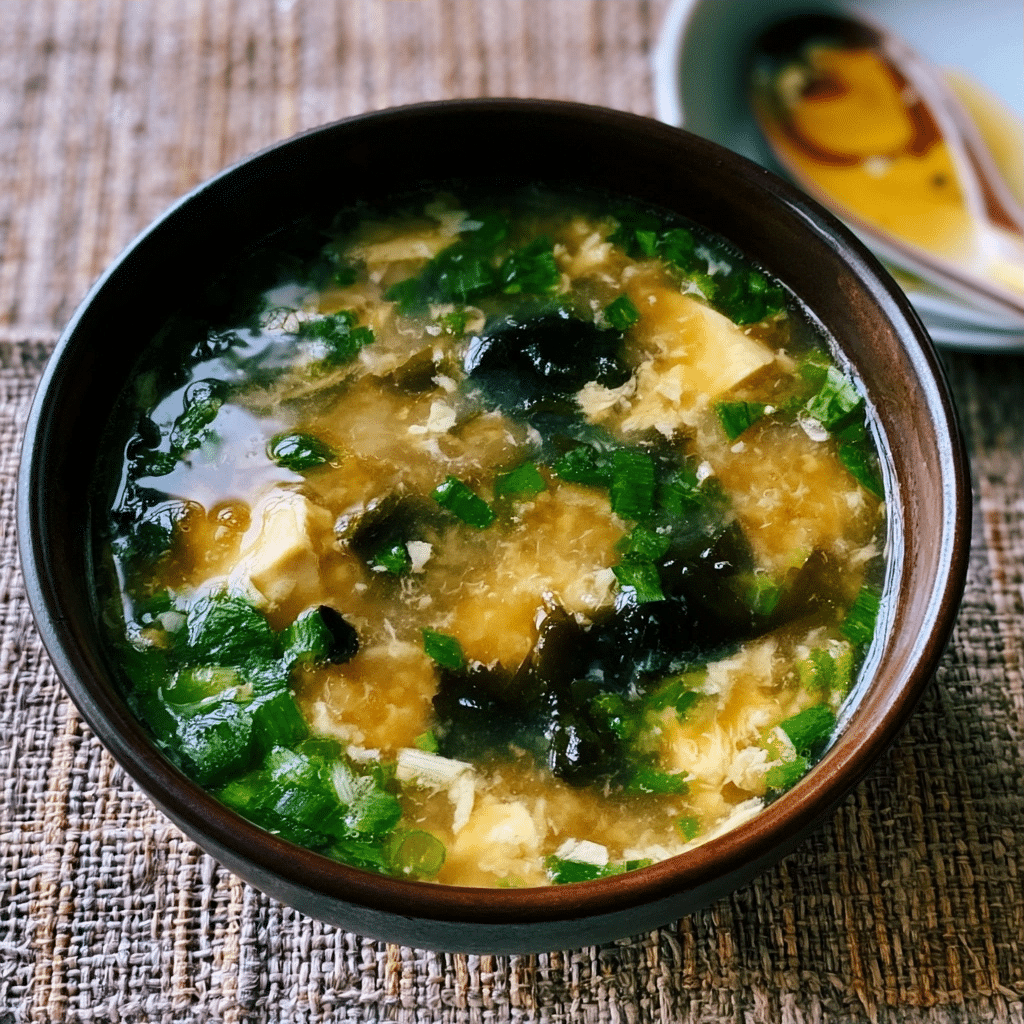
10-Minute High-Protein Miso Soup
Ingredients
Method
- Bring water to a gentle simmer
- Whisk in miso paste until fully dissolved
- Poach egg ribbons by slowly drizzling whisked eggs into the broth while stirring
- Add tofu cubes and optional ingredients
- Stir in rice vinegar and serve immediately
Notes
Store in air-tight containers up to 3 days
For vegan version: omit eggs and verify dashi paste is plant-based