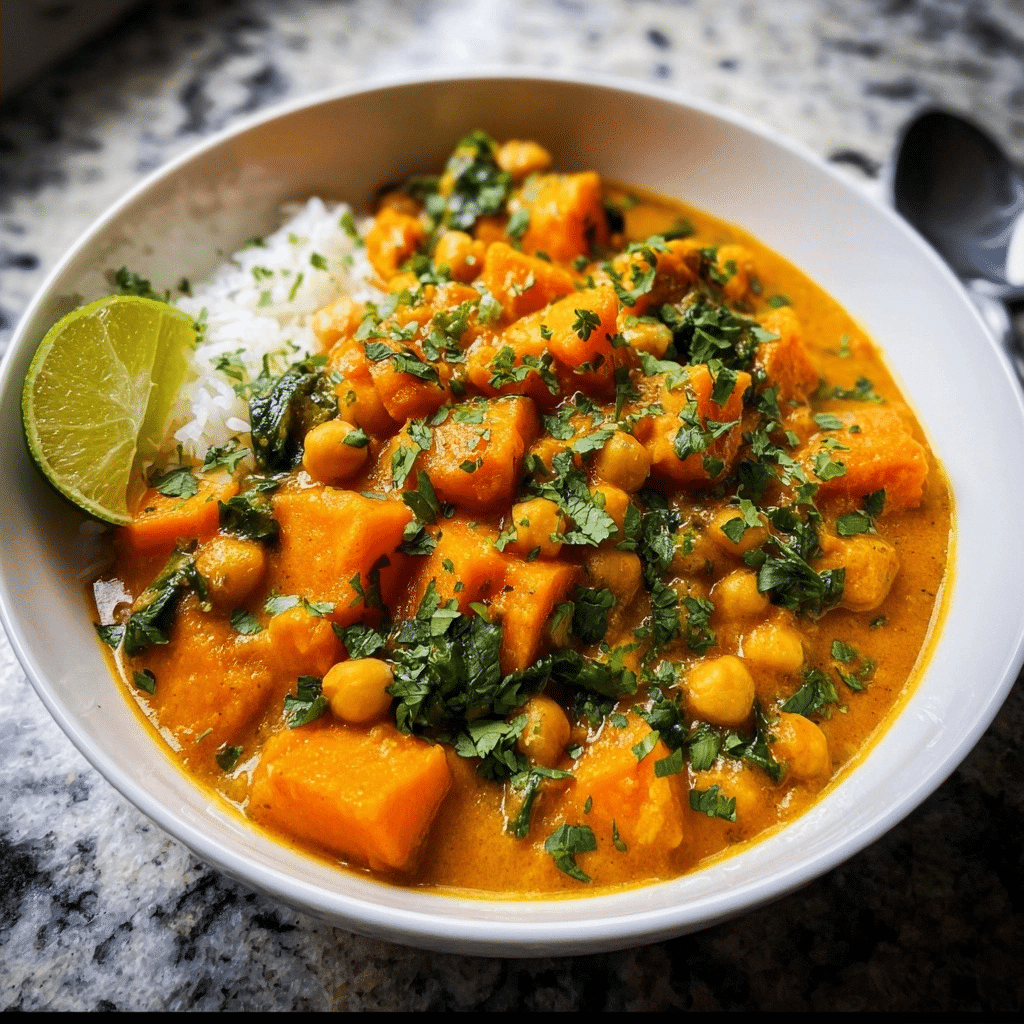
Finding a dinner that balances nutritional density with restaurant-quality flavor can often feel like a culinary challenge. This Sweet Potato and Chickpea Curry is the definitive solution for those seeking a high-protein, plant-based dinner that doesn’t compromise on texture or warmth. By combining the natural sweetness of roasted tubers with the earthy, protein-packed profile of chickpeas, we create a dish that satisfies cravings while fueling the body with complex carbohydrates and essential minerals. Whether you are following a strict vegan lifestyle or simply looking to reduce meat consumption without losing that ‘full’ feeling, this recipe serves as a foundational pillar for your weekly meal rotation.

Is Sweet Potato Curry Good for Weight Management and Lean Muscle?
While many curries rely on heavy creams or starches for thickness, this version utilizes the natural fiber of sweet potatoes and the healthy fats of coconut milk to create satiety. Sweet potatoes are high in beta-carotene and vitamin A, while chickpeas provide a significant dose of plant-based protein and fiber. This combination stabilizes blood sugar levels, preventing the post-dinner energy crash often associated with high-carb meals. For those tracking macros, this dish offers a balanced distribution of fats, slow-burning carbs, and protein, making it an excellent recovery meal after a high-intensity workout.
How to Achieve the Perfect Creamy Texture Without Dairy
The secret to a luscious, silk-like curry consistency lies in the dual-action of full-fat coconut milk and the natural breakdown of the sweet potato starch. As the sweet potatoes simmer, their outer edges soften and release amylopectin into the sauce, acting as a natural thickener. We avoid the use of processed thickeners or flours, keeping the recipe naturally gluten-free. Additionally, the selection of red curry paste—free from any fish sauce or shrimp paste—ensures a depth of umami that mimics the complexity of traditional stews while remaining strictly vegan and Halal-compliant.
Can I Make This Curry Low-Carb or Keto-Friendly?
If you are following a ketogenic or low-carb lifestyle, you can easily adapt this base recipe. While sweet potatoes are higher in carbs, you can swap them for cauliflower florets or daikon radish, which mimic the texture of cooked potatoes with a fraction of the net carbs. To maintain the protein density, keep the chickpeas or transition to hemp seeds for an even higher protein-to-carb ratio. Always serve over cauliflower rice instead of traditional jasmine rice to keep the glycemic index at a minimum. The healthy fats from the full-fat coconut milk provide the necessary ketones to keep your body in a fat-burning state.
How to Boost the Protein Content in Vegan Curry
For athletes or individuals focusing on high protein intake, there are several seamless ways to enhance this dish. While chickpeas already offer about 15 grams of protein per cup, you can add cubed firm tofu or tempeh during the simmering stage. These soy-based proteins absorb the turmeric and ginger notes beautifully. Another expert tip is to stir in a tablespoon of nutritional yeast at the end of the cooking process; not only does this add a nutty, cheesy flavor, but it also provides a complete protein source containing all nine essential amino acids.
Step-By-Step Process: Master the One-Pan Simmer
Step 1: The Aromatics. Begin by heating two tablespoons of vegetable oil in a large heavy-bottomed pot or Dutch oven. Add your minced garlic and fresh ginger. The goal here is to release the essential oils without browning the garlic. This creates the aromatic foundation of the entire dish.
Step 2: Spicing and Searing. Add the vegan-friendly red curry paste and ground turmeric. Sautéing the paste in oil (a technique known as ‘blooming’) awakens the dried spices and creates a vibrant, fragrant base. Once fragrant, toss in your chopped sweet potato chunks, ensuring each piece is coated in the spice mixture.
Step 3: The Simmer. Pour in the full-fat coconut milk and water. Bring the mixture to a gentle boil, then reduce the heat to low. This slow-simmering process is crucial for ensuring the potatoes are tender inside while remaining intact on the outside. Add your chickpeas, salt, and black pepper during this phase.
Step 4: Finishing Touches. Once the potatoes are fork-tender, stir in the baby spinach or kale. The residual heat will wilt the greens in about 60 seconds. Finally, finish with fresh lime juice to brighten the flavors and balance the richness of the coconut milk.
Essential Substitutions and Variations
- Greens: If baby spinach is unavailable, kale or Swiss chard work perfectly. Just ensure you remove the tough stems from the kale first.
- Heat Level: If you prefer a milder curry, reduce the red curry paste to 1.5 tablespoons. For more heat, add a sliced Thai bird’s eye chili during the aromatic stage.
- Sweetener: This recipe calls for an optional tablespoon of sugar to balance the acidity of the lime; however, you can use maple syrup or coconut sugar for a more natural alternative.
- Legumes: If you run out of chickpeas, brown or green lentils make a fantastic high-protein substitute that adds a more earthy flavor profile.
Meal Prep and Storage Tips
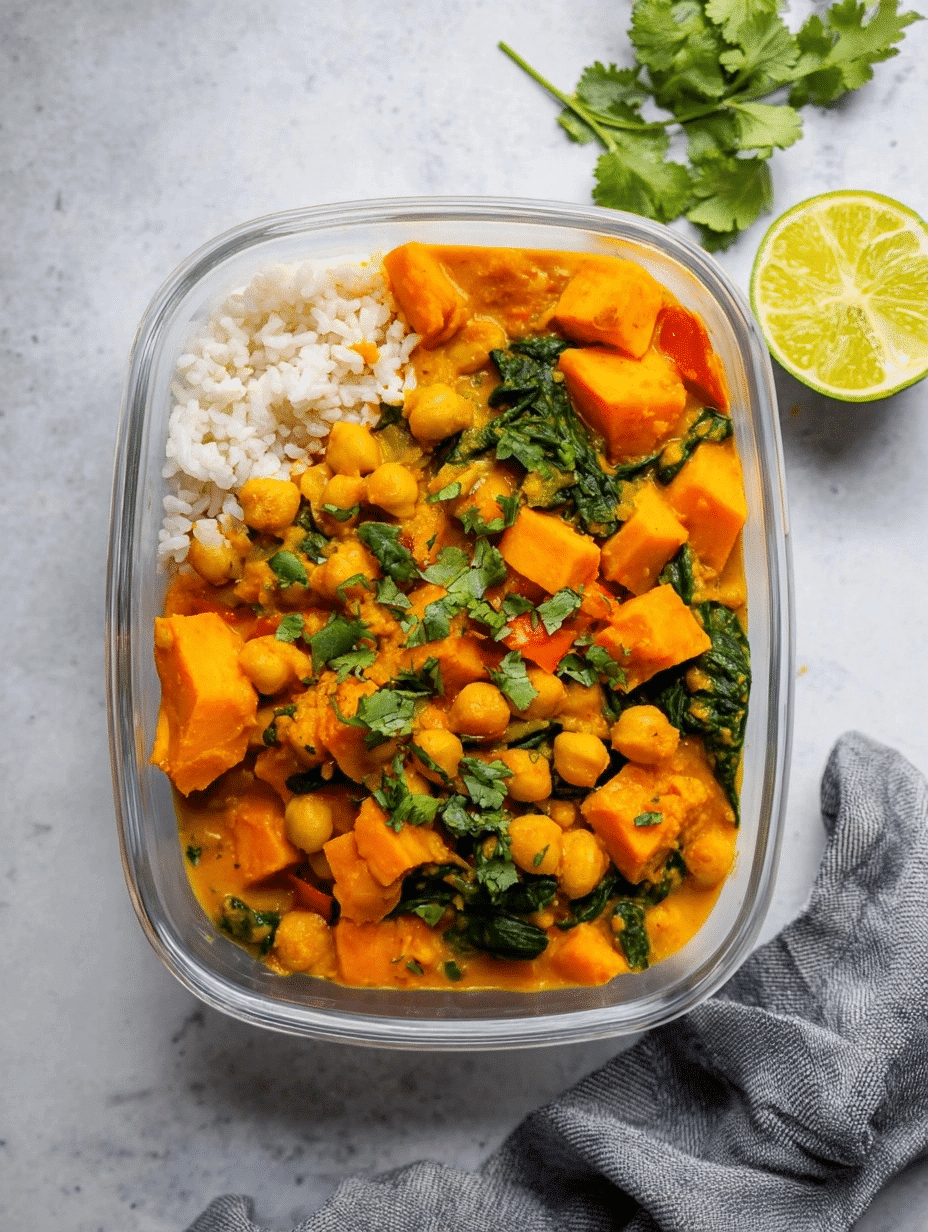
This Sweet Potato and Chickpea Curry is a meal prepper’s dream because the flavors actually improve after a day or two in the refrigerator. Store in airtight glass containers for up to 5 days. When reheating, you may need to add a splash of water or vegetable broth, as the sweet potatoes will continue to absorb the liquid over time. This recipe is also freezer-friendly; however, for the best texture, freeze the curry without the greens and add fresh spinach when reheating.
Join the Community
We would love to see how your curry turned out! This recipe is designed to be a canvas for your culinary creativity. Did you add extra tofu? Did you swap the rice for quinoa? Let us know in the comments below. If you enjoyed this high-protein, vegan meal, please leave a 5-star rating and share it with your friends on social media. Save this to your ‘Healthy Dinner Ideas’ board on Pinterest so you always have a reliable, nutritious meal plan at your fingertips!
Sweet Potato and Chickpea Curry (Easy Healthy Vegan Dinner)
Ingredients
Method
- Preheat oven to 400°F (200°C). Toss sweet potato cubes with 1 tsp olive oil and roast for 25 minutes, until tender.
- Heat remaining oil in a large pan over medium heat. Sauté garlic, ginger, curry paste, turmeric, and cumin for 1 minute.
- Add chopped onion and cook until translucent (5-7 minutes). Stir in roasted sweet potatoes, chickpeas, and coconut milk.
- Bring to simmer, reduce heat, and cook for 20-25 minutes until sweet potatoes break down slightly and mixture thickens.
- Fold in fresh spinach and cook until just wilted. Season with salt.
- Serve over jasmine rice or cauliflower rice, garnished with cilantro.
Notes
Use canned chickpeas for convenience, or substitute with 1 cup cooked hemp seeds for higher protein.
Coconut milk can be reduced for a thicker sauce if preferred.
Store leftovers in an airtight container in the fridge for up to 4 days.