There is perhaps no greater culinary icon in the world of Japanese convenience food than the Tamago Sando, or the Authentic Japanese Egg Sandwich. Known for its pillowy softness, creamy golden center, and the perfect balance of savory and sweet, this sandwich has transcends its humble origins in Tokyo’s 7-Eleven and Lawson stores to become a global gourmet phenomenon. In this comprehensive guide, we are diving deep into the science behind the perfect egg salad, the architecture of Shokupan (Japanese milk bread), and how you can optimize this recipe for a high-protein, low-carb lifestyle without sacrificing an ounce of flavor.

Whether you are looking for a quick, macro-friendly lunch or a luxurious weekend brunch, the Authentic Japanese Egg Sandwich offers a unique profile of healthy fats and high-quality protein. By focusing on ingredient functionality—specifically the emulsion of Japanese mayonnaise and the steam-cooking of eggs—you can achieve a texture that is light as air yet deeply satisfying. We will also explore how to adapt this classic for those seeking keto-friendly alternatives, ensuring that everyone can enjoy the velvet-smooth richness of a true Tamago Sando.
Why This Authentic Japanese Egg Sandwich is a Nutritional Powerhouse
At its core, this sandwich is an incredible source of high-biological-value protein. Eggs are often called the “gold standard” of protein because they contain all nine essential amino acids. By utilizing specifically sized large eggs and focusing on the ratio of yolks to whites, we maximize the choline and vitamin D content. For those following a low-carb protocol, the filling itself is naturally keto; by simply swapping the Shokupan for a grain-free, protein-enhanced bread, you transform a comfort food classic into a fat-burning fuel source.
The Essential Role of Kewpie Mayonnaise and Ingredient Science
What differentiates an Authentic Japanese Egg Sandwich from a standard Western egg salad? The answer lies in the chemistry of the ingredients. Traditional American mayo uses whole eggs and soybean oil, resulting in a neutral flavor. In contrast, Japanese Kewpie mayonnaise uses only egg yolks and a unique blend of vinegars (often apple cider or rice vinegar). This creates a higher concentration of amino acids (specifically glutamate), which provides that signature umami punch.
- The Binder: The high lecithin content in the yolk-only mayo acts as a superior emulsifier, coating the chopped egg whites in a silkier film than standard mayo.
- The Seasoning: We use Diamond Crystal kosher salt because its hollow flakes dissolve more evenly into the creamy base, preventing salty hotspots.
- The Sweetness: While we use a minimal amount of sugar to balance the acidity of the vinegar, it performs a crucial role in tenderizing the proteins in the egg, making the filling feel softer on the palate.
How to Make It Step-by-Step: The Visual Framework
Achieving the perfect texture requires precision. Follow these steps to ensure your sandwich looks as good as those found in a Ginza depachika (department store basement food hall).
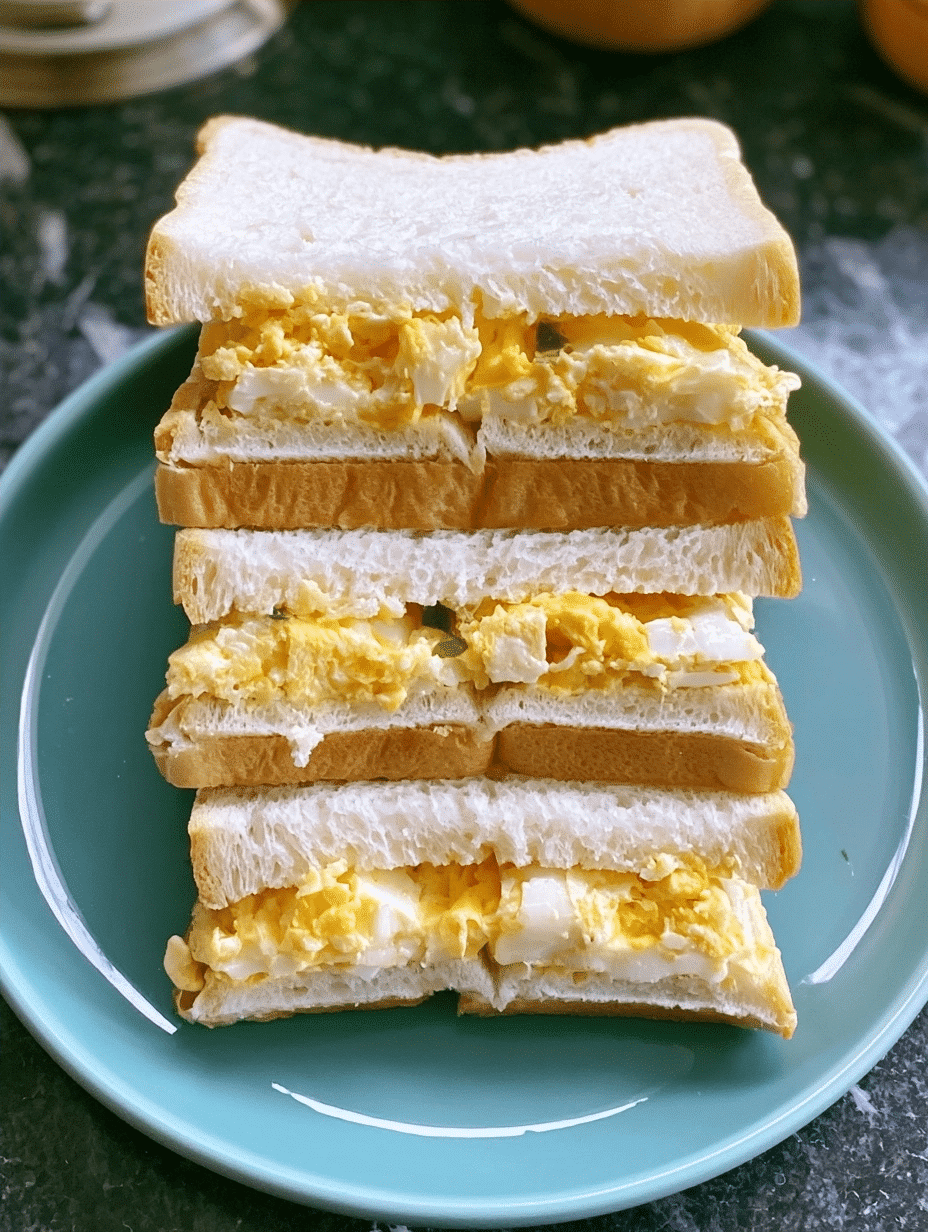
Step 1: The Precision Hard-Boil
To avoid the dreaded green ring around the yolk (caused by overexposure to sulfur and iron), place your 3 large eggs in a pot of cold water. Bring to a boil, then immediately turn off the heat and cover. Let them sit for exactly 11 minutes. This results in a firm yet creamy yolk that mashes into a smooth paste while keeping the whites tender.
Step 2: The Ice Bath and Peeling
Shock the eggs in an ice bath for 5 minutes. This stops the cooking process instantly and creates a thermal shock that pulls the egg membrane away from the shell, ensuring a smooth, unblemished white—crucial for visual presentation.
Step 3: Creating the Creamy Filling
Separate one yolk and mash it into a fine powder with the sugar, salt, pepper, and milk. This creates a “slurry” that ensures the flavor is distributed evenly. Fold in the Kewpie mayo, then finely chop the remaining whites and yolks. The goal is a uniform consistency with small, tender bits of white for structural integrity.
Step 4: The Bread Preparation
Apply a thin layer of salted butter to every corner of your Shokupan. This isn’t just for flavor; the fat in the butter acts as a moisture barrier, preventing the bread from becoming soggy from the egg mixture. This is essential if you are meal-prepping these for later.
People Also Ask (PAA)
Can I Make This Keto-Friendly?
Absolutely. To make this an ultra-low-carb meal, replace the Shokupan with a keto bread made from almond flour or psyllium husk. You can also serve the egg mixture inside a hollowed-out cucumber or on a bed of microgreens. The egg filling itself contains very few carbs, making it a staple for keto fat-bomb recipes.
How Can I Boost the Protein Even Further?
If you are an athlete or looking to increase satiety, add a layer of thinly sliced roasted turkey breast or lean roast beef. These additions provide essential iron and B-vitamins while maintaining the sandwich’s savory profile. Always avoid pork products to stay within the dietary constraints of this authentic method.
Is There a Dairy-Free Swap?
For a dairy-free version, substitute the 2 teaspoons of milk with unsweetened almond milk or soy milk. Substitute the salted butter with an avocado-oil-based spread or a thin layer of mustard to maintain the moisture barrier on the bread.
Pro-Tips for High-CTR Pinterest Presentation
When photographing your Authentic Japanese Egg Sandwich for social media, focus on the “cross-section.” Use a very sharp serrated knife to cut the crusts off the Shokupan first. Then, cut the sandwich in half vertically. The contrast between the bright white bread and the vibrant yellow filling is what drives engagement. Wipe your knife between every single cut to ensure the edges remain pristine and professional.
Variations and Low-Carb Swaps
While the classic version is iconic, you can experiment with these high-protein variations:
- The Umami Kick: Add 1/4 teaspoon of nutritional yeast to the egg mixture for a “cheesy” flavor that remains dairy-free and adds B-complex vitamins.
- The Green Goddess: Add finely chopped chives or scallions. This adds fiber and phytonutrients without adding significant calories.
- The Beef Sando Twist: Add a thin layer of cold-sliced roast beef beneath the egg for a hearty, high-protein lunch that mimics the “Wanpaku” (energetic) sandwich style popular in Japan.
Conclusion: Save This Recipe to Your Pinterest!
The Authentic Japanese Egg Sandwich is more than just a meal; it’s an exercise in culinary mindfulness. By choosing high-quality ingredients and following precise cooking methods, you create a lunch that is physically nourishing and mentally satisfying. The combination of protein-rich eggs and healthy fats from Kewpie mayo ensures long-lasting energy levels without a mid-afternoon crash. Don’t forget to save this recipe to your “Healthy Lunch Ideas” or “Japanese Recipes” Pinterest boards to keep this high-protein staple within reach!
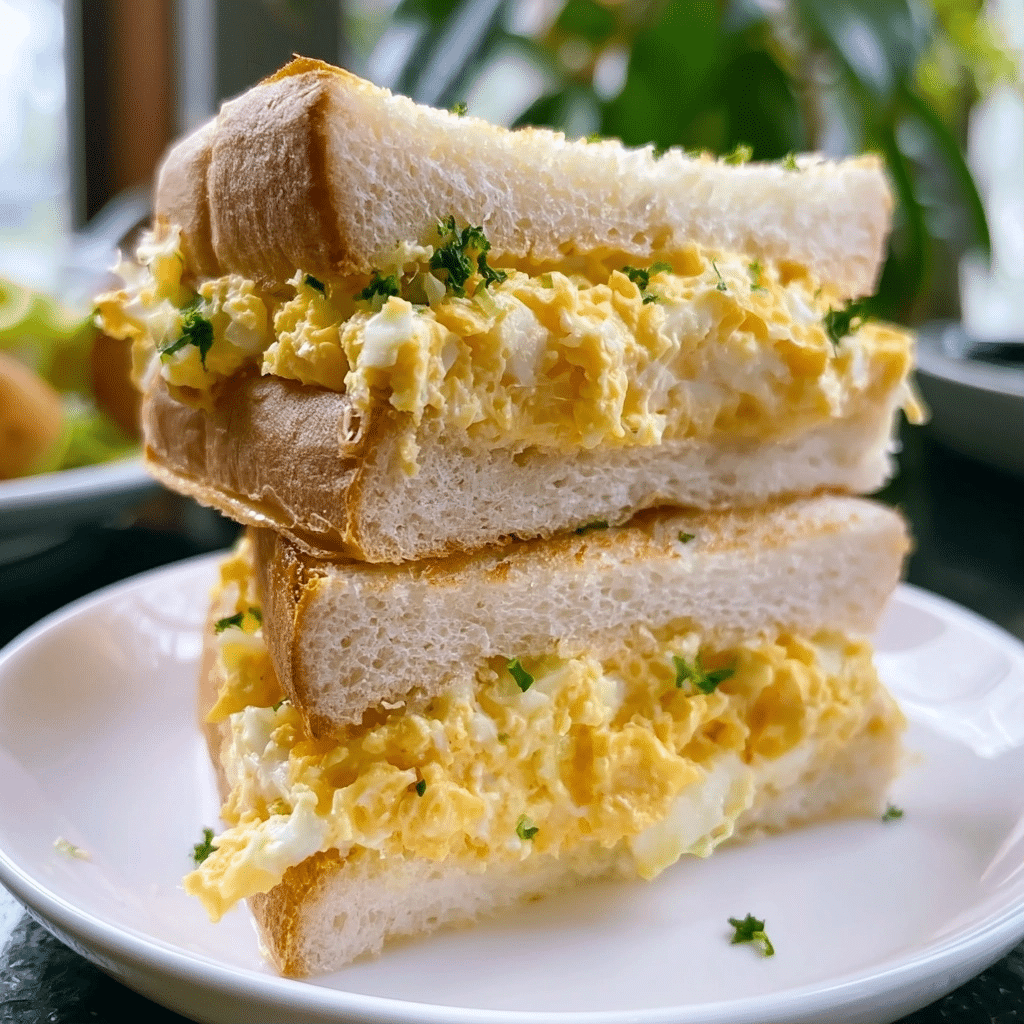
Authentic Japanese Egg Sandwich (Tamago Sando)
Ingredients
Method
- Gently poach or steam eggs for 6-7 minutes until yolks remain tender
- Cool eggs, then mash gently with a fork to preserve yolk texture
- Mix in mayonnaise, salt, and sugar (if using)
- Warm shokupan in a toaster
- Spoon the egg mixture onto one slice, add vinegar if desired, and top with the second slice
Notes
Use rice vinegar or a splash of apple cider vinegar for brightness
Store leftover egg filling in the fridge for up to 24 hours
For extra richness, add a tiny drizzle of soy sauce