Finding a meal that satisfies the craving for bold, Mediterranean flavors while hitting aggressive protein targets can often feel like a culinary tightrope walk. Most traditional pasta salads are heavy on the simple carbohydrates and light on the satiating macros. However, this High-Protein Easy Antipasto Italian Pasta Salad redefines the category. By strategically layering premium beef-based proteins, fresh fats, and fiber-rich vegetables, we’ve created a dish that isn’t just a side—it’s a metabolic powerhouse perfect for high-performance meal prepping.
Whether you are looking for a post-workout recovery meal or a vibrant office lunch that won’t lead to a 3:00 PM sugar crash, this recipe delivers. We focus on high-quality beef pepperoni and salami to ensure 100% compliance with pork-free dietary requirements while maximizing flavor through curing and spices. This is the hearty, deep-dish flavor profile of an Italian sub, reimagined into a nutrient-dense bowl.
How to Boost the Protein Content in Your Pasta Salad
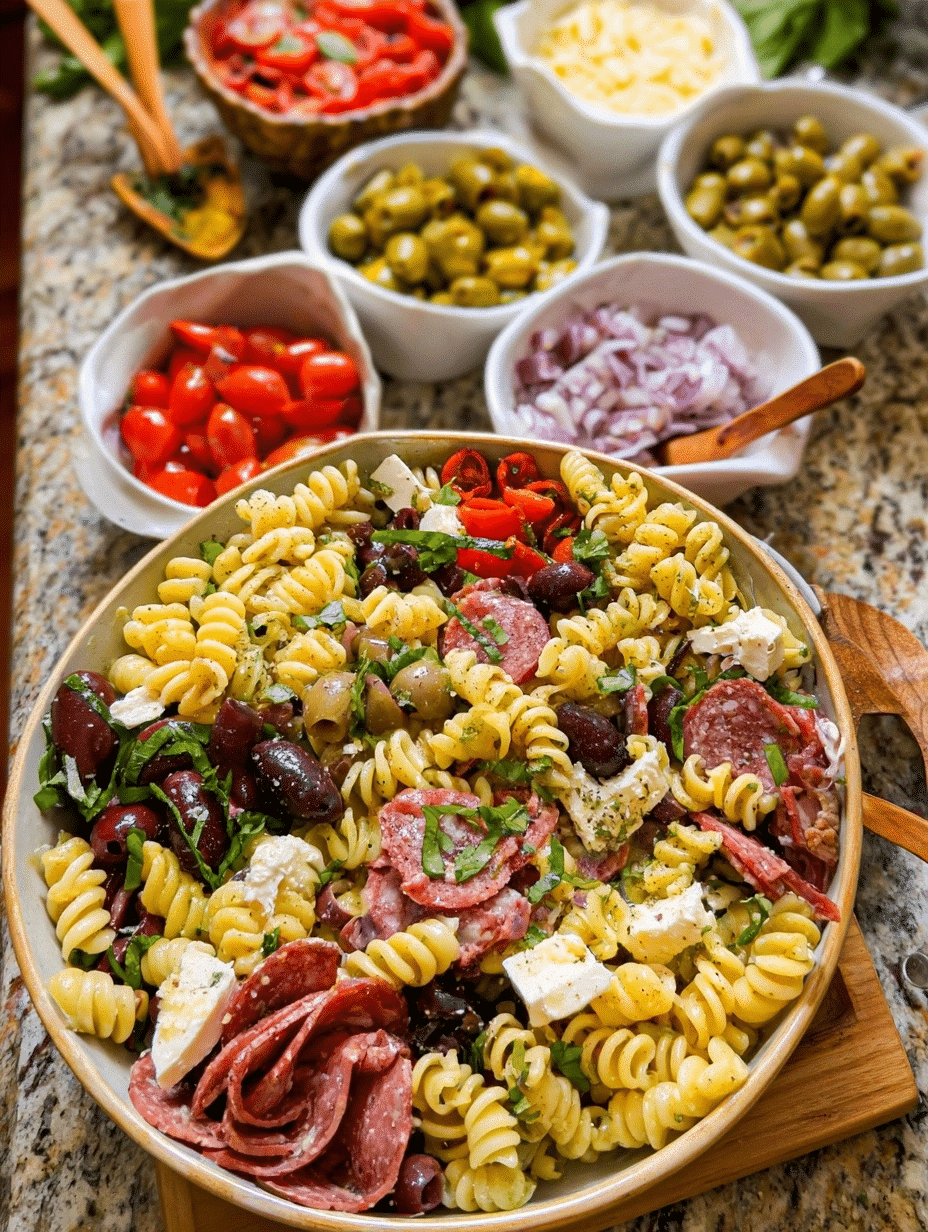
When we discuss protein density in a cold dish, many people immediately think of chicken breast. While lean, it can often dry out. In this antipasto version, we utilize the biological value of beef-based cured meats and dairy. To truly elevate the protein profile for those with higher caloric needs, consider these scientific swaps:
- Choose Protein-Enriched Pasta: Opt for rotini made from chickpeas, lentils, or lupini beans. These alternatives can provide up to 25 grams of protein per serving compared to the 7 grams found in standard semolina.
- The Power of Fresh Mozzarella: Mozzarella pearls aren’t just for texture. They contain casein and whey proteins that digest at different rates, keeping you full longer.
- Beef-Based Cured Meats: By using beef salami and beef pepperoni, we provide a dense source of amino acids and B-vitamins. We ensure this recipe remains entirely pork-free without sacrificing the smoky, fermented tang typical of Italian delicatessen flavors.
Can I Make This Keto-Friendly or Low-Carb?
Absolutely. The beauty of an antipasto salad lies in the “antipasto” itself—the “before the pasta” ingredients. To transition this to a ketogenic or low-carb lifestyle, simply replace the 8 oz. of dry rotini with a low-carb substitute. Palmini (hearts of palm) noodles, konjac-based “shirataki” pasta, or even extra roasted cauliflower florets work beautifully. Since the bulk of the flavor comes from the premium oils, cured beef, and acidic vinegar, you won’t lose the essence of the dish by removing the wheat.
From a nutritional standpoint, the fats from the olive oil and olives provide the necessary ketones for energy, while the fiber from the artichoke hearts and pepperoncini keeps the net carb count minimal. Always ensure your balsamic or red wine vinegar is free of added sugars to maintain metabolic ketosis.
The Role of Emulsification in Italian Vinaigrette
The dressing is the soul of a pasta salad. We avoid store-bought dressings because they often contain seed oils and hidden sugars. Our homemade Italian Vinaigrette uses extra virgin olive oil and red wine vinegar. The science of a great dressing lies in the emulsion. By whisking the mustard-like qualities of garlic and Italian seasoning into the vinegar before slowly adding the oil, you create a stable suspension that clings to every crevice of the rotini.
Step-by-Step Preparation Guide
1. Cooking the Pasta Al Dente
Bring a large pot of salted water to a boil. It is vital to salt the water “like the sea” because this is the only time the pasta itself will be seasoned. Cook the rotini for exactly 1 minute less than the package instructions. For a cold salad, you want a firm “bite” (al dente). Once cooked, drain and immediately rinse with cold water. This stops the cooking process and removes excess starch, preventing the salad from becoming gummy.
2. Mastering the Antipasto Mix
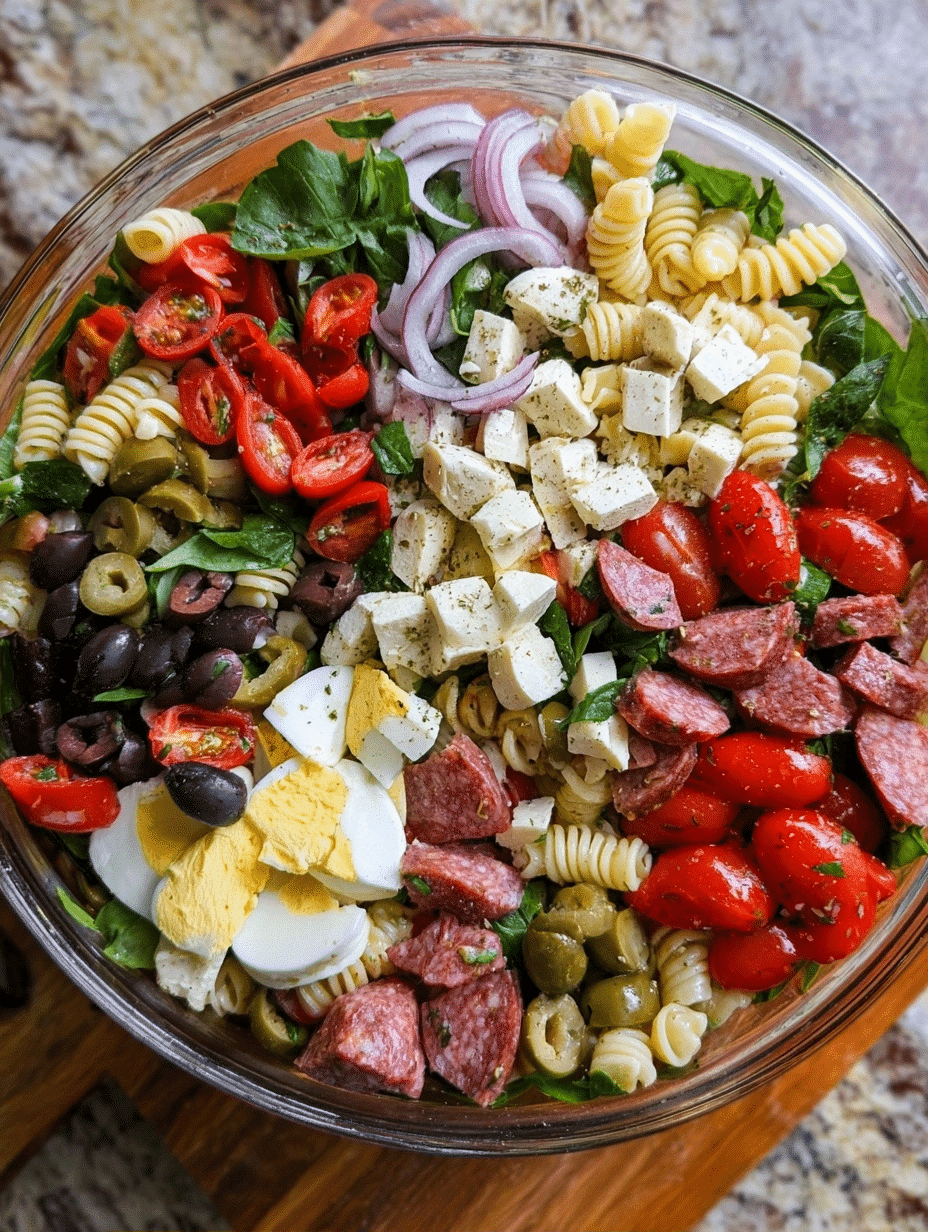
While the pasta cools, prepare your proteins and vegetables. Chop the beef salami and beef pepperoni into uniform bite-sized pieces. Halve the cherry tomatoes and olives. Quartering the artichoke hearts ensures that every forkful has a bit of everything. In a massive mixing bowl, combine the meats, cheese pearls, red onion, and pepperoncini. This “dry mix” allows the flavors to begin mingling even before the liquid is added.
3. Crafting the Vinaigrette
In a separate glass jar or bowl, combine the red wine vinegar, minced garlic, Italian seasoning, red pepper flakes, salt, and pepper. Slowly drizzle in the olive oil while whisking vigorously. The red wine vinegar provides a sharp acidity that cuts through the richness of the beef pepperoni and mozzarella, creating a balanced palate.
4. The Final Toss and Marination
Pour the dressing over the pasta and antipasto mixture. Fold in the fresh basil last to prevent it from bruising or wilting too much under the acidity. For the best results, let the salad sit in the refrigerator for at least 30 minutes. This allows the pasta to absorb the vinaigrette, transforming the starch into a vessel for the herbs and garlic.
Expert Strategy for Meal Prepping
This recipe is a meal prepper’s dream because it actually improves with time. Unlike leaf-based salads that wilt, pasta salad ingredients are robust. If you are prepping for a 5-day work week, store the salad in airtight glass containers. Glass maintains a colder temperature and doesn’t retain odors. If the salad seems a bit dry on day three, simply add a teaspoon of water or a tiny splash of vinegar to “awaken” the oils and starches.
Dairy-Free and Vegan Swaps
If you are avoiding dairy, omit the mozzarella pearls and replace them with cubes of firm, salted tofu or a vegan cashew-based mozzarella. Since the protein in this dish is heavily reliant on the beef salami and pepperoni, vegan eaters should substitute the meats with marinated tempeh or high-protein seitan chunks. Always ensure your meat alternatives are free from pork-derived enzymes or flavorings.
Why No Alcohol or Pork?
In high-performance and inclusive cooking, we choose to omit alcohol and pork to ensure the recipe is accessible to everyone, including those following Halal or specific health-conscious diets. By using red wine vinegar (which is a fermented product where the alcohol has been converted to acetic acid) rather than actual wine, we keep the Mediterranean tang without the alcohol content. Using beef-based charcuterie ensures a rich, savory depth that often surpasses pork in iron and zinc content, making this a truly “hearty” meal.
Final Call to Action
This High-Protein Easy Antipasto Italian Pasta Salad is a testament to the fact that healthy eating doesn’t have to be bland or restrictive. It is a colorful, textured, and incredibly satisfying dish that bridges the gap between gourmet Italian flavors and functional nutrition. If you enjoyed this meal prep guide, please leave a 5-star rating below and share your results! Don’t forget to save this recipe to your Pinterest Meal Prep or Healthy Dinner boards so you always have it on hand for your Sunday prep sessions.


High-Protein Easy Antipasto Italian Pasta Salad | Hearty Meal Prep
Ingredients
Method
- 1. Cook chickpea or lentil rotini according to package instructions.
- 2. In a large bowl, combine cooked pasta, beef pepperoni, salami, artichoke hearts, pepperoncini, cherry tomatoes, mozzarella pearls, and olives.
- 3. In a small bowl, whisk olive oil, Italian seasoning, apple cider vinegar, and red onion.
- 4. Pour dressing over the salad and toss to coat.
- 5. Chill for at least 30 minutes before serving.
Notes
Store in an airtight container in the refrigerator for up to 3 days.
Add fresh basil or spinach for extra flavor.