Finding the perfect balance between a nutritious weeknight meal and a restaurant-quality showstopper can be a challenge. However, this Baked Salmon with Fresh Mango Salsa achieves that equilibrium with effortless grace. By pairing a deeply caramelized brown sugar and spice rub with a bright, zesty fruit topping, we create a sensory experience that hits every taste bud. The salmon remains moist and flaky under its crust, while the mango salsa provides a refreshing contrast that elevates the entire dish.
Whether you are a seasoned home cook or a beginner looking to master seafood, this guide provides the technical foundation and culinary secrets needed to produce perfect results every time. We will explore the science of the caramelized crust, the importance of ingredient freshness, and the nuances of balancing heat and acidity without ever needing to rely on heavy oils or alcoholic deglazers.
Why This Salmon Recipe Works
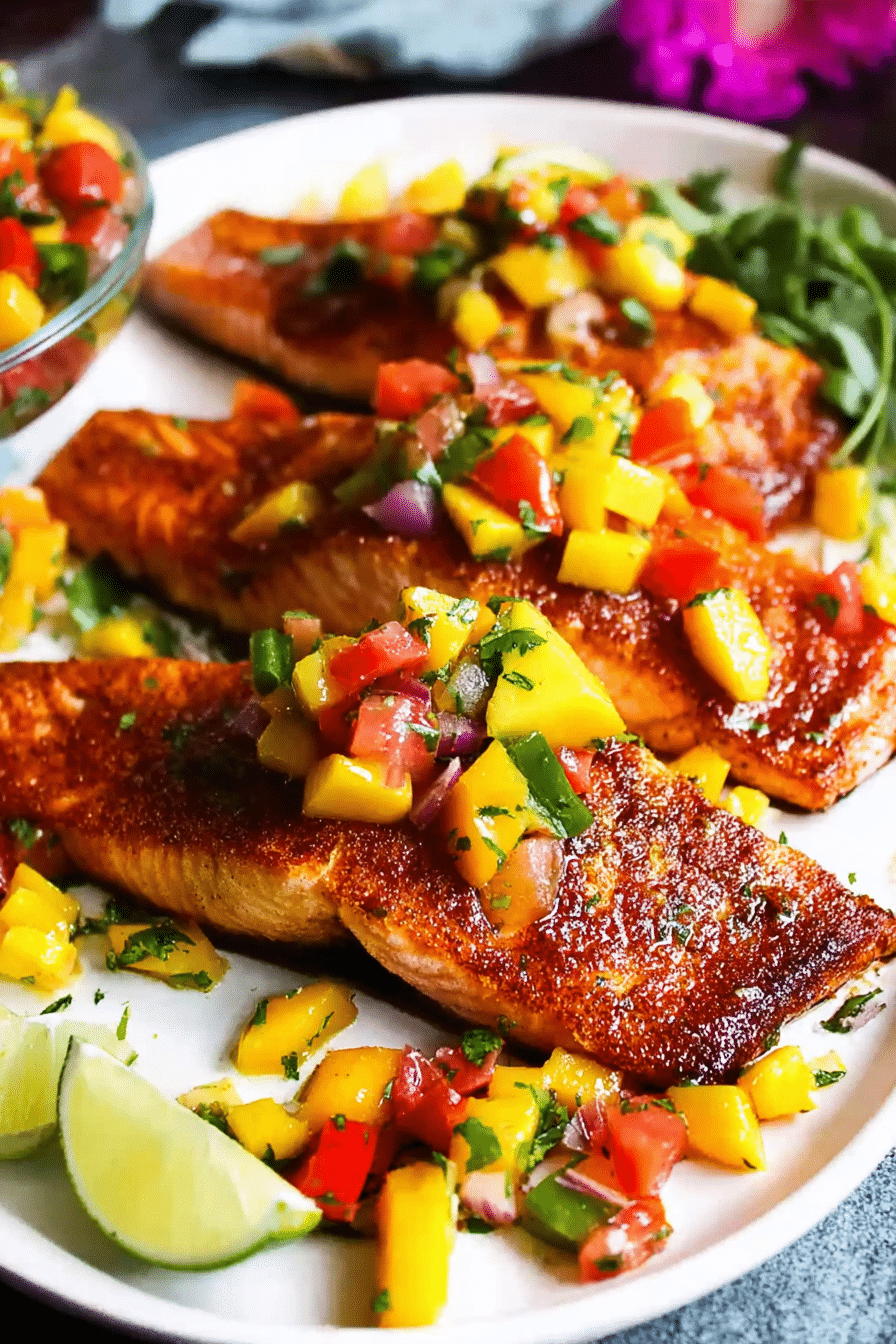
The success of this recipe lies in the chemical interaction between the brown sugar and the spice blend. When subjected to the dry heat of the oven, the 3 tablespoons of packed light brown sugar undergo caramelization. This creates a thin, glass-like crust that traps the natural juices of the salmon inside. Simultaneously, the earthiness of the cumin and coriander, combined with the smoky heat of chili powder, prevents the sugar from becoming cloyingly sweet.
The mango salsa acts as the necessary acidic component. In professional cooking, fat (salmon) requires acid (lime juice) to brighten the palate. The presence of baby tomatoes adds a secondary layer of umami, ensuring that the salsa is more than just a sweet garnish—it becomes a structural component of the meal.
The Importance of High-Quality Ingredients
When preparing fish, the quality of your protein is paramount. For this recipe, 1 ¼ pounds of salmon fillets—ideally center-cut—provide a consistent thickness that ensures even cooking. Whether you choose skin-on or skinless is a matter of preference; however, keeping the skin on during baking can help retain moisture, even if you choose not to eat it afterward.
In the salsa, the ripeness of the mango is the deciding factor for success. A ripe mango should give slightly under gentle pressure, similar to an avocado. If your mango is too firm, the salsa will lack the necessary juice to bind the red onion and cilantro together. For the tomatoes, baby tomatoes (such as cherry or grape varieties) are preferred because they have a lower water content than larger vine tomatoes, preventing your salsa from becoming soggy.
Step-by-Step Culinary Technique
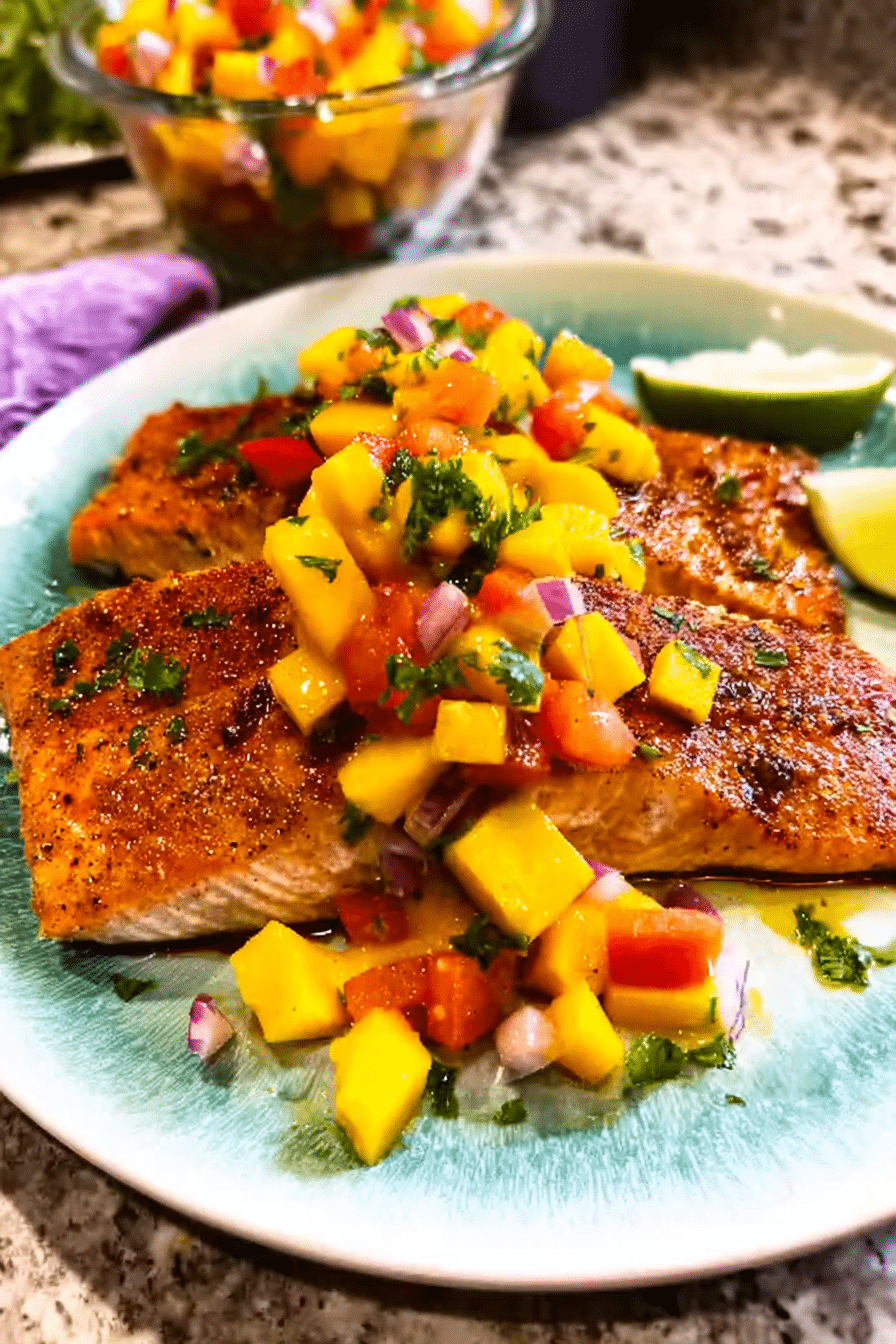
To begin, ensure your salmon is brought to room temperature for about 15 minutes before baking. This prevents the exterior from overcooking while the center remains cold. Pat the fillets dry with a paper towel; moisture is the enemy of a good crust. Rub the salmon generously with the blend of brown sugar, cumin, chili powder, coriander, and salt.
Baking at a high temperature (around 400°F/200°C) allows the sugar to bubble and brown quickly. While the fish rests, assemble the salsa. By tossing the cubed mango, halved tomatoes, minced red onion, and cilantro with fresh lime juice, you allow the flavors to macerate. This process draws out the natural juices of the fruit, creating a light syrup that coats the vegetables and herbs.
Variations and Dietary Substitutions
One of the beauties of this dish is its versatility. While the recipe as written is naturally dairy-free and contains no alcohol or pork products, you can further customize it based on your dietary needs:
- Low-Carb/Keto Option: Replace the brown sugar with a gold monk fruit sweetener or erythritol blend to maintain the caramelization without the glycemic impact.
- Vegan Adaptation: The spice rub and mango salsa work exceptionally well on thick-cut cauliflower steaks or firm tofu blocks.
- Grain-Free/Paleo: Ensure your chili powder blend does not contain anti-caking agents like cornstarch, and use coconut sugar in place of light brown sugar.
- Extra Heat: For those who enjoy a capsaicin kick, increase the cayenne pepper to its full ½ teaspoon limit and include the seeds of the jalapeño in the salsa.
Serving Suggestions and Storage
This salmon is a complete meal when served alongside a bed of jasmine rice or quinoa, which can soak up the extra lime juice from the salsa. For a lighter approach, serve it over a massaged kale salad or with roasted asparagus. The colors of the mango and tomato make it a centerpiece-worthy dish for dinner parties.
If you have leftovers, they make for an incredible chilled salmon salad the next day. Flake the cold salmon and mix it directly into the salsa, serving it inside corn tortillas for a quick taco lunch. Remember that cooked salmon is best consumed within 2 days to maintain its delicate texture.
Final Thoughts on Mastering Salmon
The key to perfect salmon is temperature control. Use a meat thermometer to pull the salmon out of the oven when it reaches an internal temperature of 135°F (57°C). The temperature will continue to rise to 145°F (63°C) as it rests, ensuring a flaky, tender interior that never feels dry. By choosing fresh, vibrant ingredients and following these structured steps, you are guaranteed a meal that is as nutritious as it is delicious.

Vibrant & Flaky: Baked Salmon with Fresh Mango Salsa
Ingredients
Method
- Bring salmon to room temperature for 15 minutes. Pat dry with paper towels.
- In a small bowl, mix brown sugar, cumin, coriander, chili powder, and 1 teaspoon salt.
- Rub spice mixture evenly over both sides of salmon fillets.
- Preheat oven to 375°F (190°C). Place salmon on parchment-lined baking sheet. Bake for 15-18 minutes until flaky but moist.
- While baking, prepare salsa: In a bowl, combine diced mango, tomatoes, red onion, jalapeño, and cilantro. Toss with lime juice and a pinch of salt.
- Serve warm salmon immediately with fresh mango salsa on top.